
 En
The Evolution of Square Nuts and Their Modern Industrial Applications
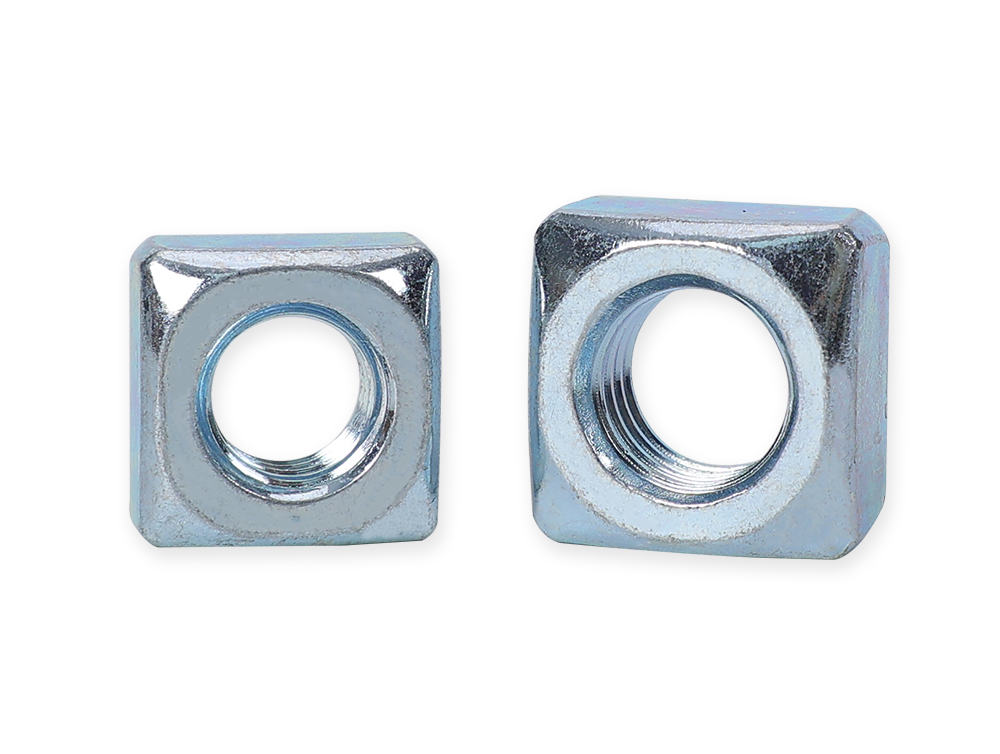
Square nut is a fastener with a four-sided outer profile and an internal thread, typically used with a bolt or threaded stud. Although hex nuts are widely used in general-purpose fastening, square nuts remain useful in certain assemblies and repair applications that require specific structural compatibility. Understanding their development and modern applications helps explain their continued role in industrial fastening.
How Have Square Nuts Evolved?
1. Applications in Traditional Mechanical Manufacturing
As mechanical manufacturing developed, bolts and nuts became common components in machinery and other structures requiring detachable connections. Square nuts have four flat sides that can be gripped by a suitable wrench or tool, making them practical for various mechanical fastening applications.
Early fasteners did not always follow consistent dimensions or manufacturing practices. As thread manufacturing, machining, and dimensional standards improved, fasteners became more suitable for mass production and interchangeable use. Square nuts also became part of standardized manufacturing systems.
2. Standardization and the Widespread Use of Hex Nuts
Industrial manufacturing placed increasing emphasis on assembly efficiency, tool access, and interchangeability. Hex nuts have multiple wrench contact positions, allowing a wrench to be repositioned at the next contact position after a 60-degree turn. This makes them suitable for many conventional fastening applications.
By comparison, square nuts generally require a larger turning angle to reposition a wrench. However, actual accessibility also depends on the available installation space and the type of tool used. The widespread use of hex nuts has not eliminated the need for square nuts. Their continued use depends on the connection design and specific assembly requirements.
What Is the Difference Between Square Nuts and Hex Nuts?
The main differences concern their shapes and suitability for particular installation conditions. Their load-bearing capacity and resistance to loosening cannot be determined by shape alone.
| Comparison | Square Nut | Hex Nut |
|---|---|---|
Shape | Four-sided | Six-sided |
Tool access | Generally requires a larger turning angle to reposition a wrench | A wrench can typically be repositioned every 60 degrees |
Installation compatibility | Suitable for installation spaces or mating structures that match its dimensions | Suitable for a wide range of conventional bolted connections |
Actual performance also depends on material, dimensions, thread fit, bearing surfaces, and service conditions.
Modern Industrial Applications of Square Nuts
1. Machinery Assembly and Maintenance
Some machines continue to use square nuts to meet original design specifications, fit existing structures, or satisfy maintenance requirements. During equipment servicing, selecting a nut that matches the original design helps avoid problems such as insufficient clearance, incompatible geometry, or changes to the fastening arrangement.
When replacing a square nut, check not only the thread specification but also the external dimensions, thickness, material, and required performance characteristics. Matching thread sizes alone does not guarantee that different nut types are interchangeable.
2. Furniture and Metal Structure Assembly
Some furniture, brackets, and metal assemblies use square nuts where the connection design accommodates their shape. In these applications, square nuts can serve as fastening components when paired with compatible mounting features.
Before selection, check whether the installation space fits the nut and allows sufficient access for the required tools. If the design requires the nut to resist rotation, verify that an appropriate anti-rotation feature is provided rather than assuming the square shape alone will prevent movement.
3. Channel Systems and Specialized Assemblies
Some channel, bracket, and specialized assembly systems require fasteners that fit specific mounting structures. Square nuts are suitable only when their dimensions, shape, and fastening arrangement are compatible with the system. Other systems may require dedicated channel nuts, spring nuts, or other purpose-designed components, so a standard square nut should not be treated as a universal substitute.
How to Choose the Right Square Nut
When selecting a square nut, consider the following factors:
- Thread specifications: Confirm the nominal diameter, pitch, and thread system match the mating bolt or threaded stud.
- Dimensions: Check the width across flats, thickness, and available installation space to ensure proper fit.
- Material and performance: Select materials and performance characteristics according to the applied loads, corrosion exposure, and operating conditions.
- Standards and design requirements: Follow the applicable product standards, property class requirements, and surface treatment specifications stated in the drawings or purchasing documents.
For square nuts installed in channels, grooves, or designated recesses, also verify the positioning method, anti-rotation features, and available assembly clearance.
Conclusion
From traditional mechanical connections to modern equipment assembly and maintenance, the use of square nuts has evolved alongside manufacturing processes and fastener standardization. Although hex nuts are more common in many general-purpose applications, square nuts remain useful where specific structural requirements apply. Selection should be based on connection design, dimensional compatibility, material properties, and actual service conditions.